Choosing the best Trifecta Truck Bed Cover in 2026 is less about finding one universal winner and more about matching a cover to your truck and routine. SEMA’s 2024 Market Report valued U.S. specialty-equipment sales at approximately $52.3 billion in 2023. That broad figure shows a substantial customization market, but it does not rank tonneau covers or prove one design performs best. That distinction matters.
A useful comparison should examine vehicle fit, installation, material, weather sealing, warranty, and how easily the cover folds for bed access. Picture a rainy commute, wet groceries, and a cover you need to open with one hand. Small details become real ones. Buyers should also check the manufacturer’s fitment guide for their truck’s model year, bed length, and any factory accessories. Compatibility can vary, even within the same truck model.
This guide will compare leading Trifecta-style options using published specifications and manufacturer guidance, while separating verified features from marketing claims. It will consider everyday use, not just a polished product photo. No cover should be assumed fully waterproof, and claimed fuel savings deserve careful scrutiny unless supported by relevant testing. The best choice may depend on how often you haul tall cargo, park outdoors, or need quick access. We’ll flag those trade-offs, too. A tidy comparison still has limits: product specifications cannot reproduce every owner’s experience, and installation quality can affect results.
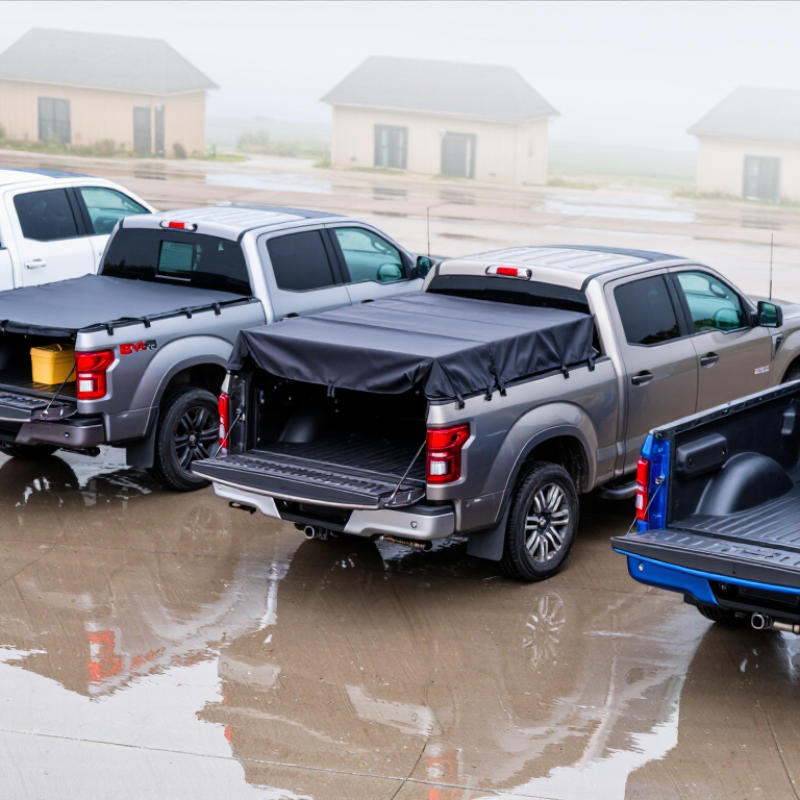
A trifecta truck bed cover is a folding tonneau cover made of three sections. It sits over the bed rails and folds toward the cab, giving access to part or all of the bed without removing the cover. Many versions use a soft, fabric-covered frame; others use rigid panels. The name describes the three-panel layout, not a single material or universal design standard.
In practical use, the cover can shield luggage, tools, or groceries from sun and light rain. It is not a sealed box, though. Water may enter around the tailgate or seams, and fit depends on the truck’s bed length, rail setup, and accessories. Check those details before buying. A cover that looks simple can be fiddly to latch with cold fingers.
Market figures show the broader context, not the performance of this cover type. SEMA’s 2023 U.S. Market Report valued the specialty-equipment market at $52.3 billion in 2022. The Auto Care Association’s 2024 Factbook estimated the U.S. automotive aftermarket at $514.9 billion in 2023, including service and repair. Neither figure isolates tonneau covers, so they cannot prove a trifecta cover saves fuel or keeps cargo dry. Real results depend on the truck, installation, and weather. That distinction matters.
| Feature | What It Means | What to Check When Choosing |
|---|---|---|
| Trifold design | A folding tonneau cover made of three hinged sections. It typically folds toward the cab to open part or all of the truck bed. | Check how many sections can be folded back and whether the folded cover blocks the rear window or needs to be secured while driving. |
| Cover construction | Many soft-folding covers use a vinyl or other flexible outer layer supported by a frame. Materials and frame designs vary by model. | Look for clearly specified cover and frame materials, reinforced hinges, and care instructions suited to your climate and use. |
| Truck-bed fit | Compatibility depends on the truck’s make, model, model year, bed length, and sometimes its rail or track configuration. | Match the cover to the exact vehicle and bed configuration. Check whether a bedliner, tool box, or cargo-management system affects fit. |
| Installation | Many folding covers attach with clamps and can be installed without drilling, but installation methods differ. | Review the installation instructions and verify that the clamps work with the truck’s bed rails and any existing accessories. |
| Weather protection | A tonneau cover can help shield cargo from sun, dust, and rain. A typical folding cover should not be assumed to make the bed watertight. | Check the sealing system around the tailgate, sides, and front of the bed. Keep valuable or water-sensitive cargo in suitable waterproof containers. |
| Security | A closed cover conceals cargo, but a soft folding cover is not equivalent to a hard, lockable storage enclosure. | Consider the cover material, attachment points, and how the tailgate locks. Do not rely on a soft cover alone to protect high-value items. |
| Bed access | A trifold cover can provide quick access by folding its panels, though some designs may need to be fully removed for unobstructed use. | Consider how often you carry tall cargo and whether the cover can be opened or removed easily when the full bed is needed. |
| Best choice in 2026 | There is no single best option for every truck. The right cover is one that fits the exact bed, meets the owner’s weather and access needs, and suits the expected level of security. | Compare verified vehicle fit, construction, installation requirements, warranty terms, and independent owner feedback before buying. |
Note: “Trifecta” is commonly used to describe a three-panel folding truck-bed cover. Exact construction, fit, features, and weather resistance depend on the specific cover and truck.
It is a folding cover with three sections that sits over the bed rails. It folds toward the cab for access to the truck bed.
It can shield luggage, tools, or groceries from sun and light rain. It is not a sealed box, so water may enter near seams or the tailgate.
No. Soft versions often use fabric over a lightweight frame. Hard-folding versions use rigid panels, which may have aluminum or composite cores.
Soft covers are usually lighter and easier to lift alone. Hard panels may better resist everyday knocks, but can weigh more when folded or removed.
Confirm the bed length, rail setup, and any accessories. Inspect the corners, tailgate overlap, and clamp positions. Small gaps matter.
Not necessarily. Seals and drainage paths affect how well it fits, and water or dust can enter through small openings. It is not fully sealed.
No. The article provides no cover-specific evidence of fuel savings. Results depend on the truck, installation, and driving conditions.
Check the latches, seams, and panel support, especially after temperature changes or heavy use. Cold fingers can make latching fiddly. A small annoyance, but worth noticing.
A Trifecta Truck Bed Cover is a folding cover designed to protect a pickup’s bed while allowing convenient access to cargo. It typically opens in sections, folds toward the cab, and closes over the bed to help shield items from weather and keep them out of sight. Its straightforward operation makes it a practical option for drivers who want a balance between coverage and access.
When comparing covers in 2026, consider how easily they open and secure, how well they fit your truck, and whether their construction suits your everyday needs. Materials and designs can differ in weight, durability, appearance, and resistance to the elements. The best choice depends on your truck’s bed dimensions, how often you carry cargo, the level of protection you need, and how much convenience matters in your routine.

 Hongkai Auto