Global truck fleets are demanding fuel tanks that combine capacity, safety, durability, and lower operating weight. A Truck Fuel Tank may look like a simple aluminum or steel vessel, but its design affects payload, corrosion resistance, range, installation time, and maintenance costs.
The International Energy Agency reports that road freight remains a major source of global oil demand and transport emissions. Its Global Fuel Economy Initiative research also shows that efficiency gains can reduce fuel use across vehicle lifecycles. Grand View Research estimates that the global automotive fuel tank market will continue expanding through the decade, supported by commercial vehicle production and stricter efficiency expectations. These reports do not make supplier selection easy. They provide direction, not a finished answer.
Mike Roeth, executive director of the North American Council for Freight Efficiency, often states, “Efficiency is the lowest-cost fuel.” That principle applies directly to tank selection. A lighter tank can support payload, while a correctly positioned tank may simplify service access and improve chassis balance. However, the lightest option is not always the best option. Real fleets face winter salt, rough loading yards, long routes, and inconsistent fuel quality.
This guide examines leading Truck Fuel Tank manufacturers for global buyers. It considers material quality, production capability, customization, testing, certifications, delivery reliability, and after-sales support. Factory photos can look impressive. They are not enough. Buyers should request traceable test records, dimensional drawings, warranty terms, and references from comparable fleets. Industry rankings also need reflection; supplier performance can vary by region, vehicle platform, and order volume.
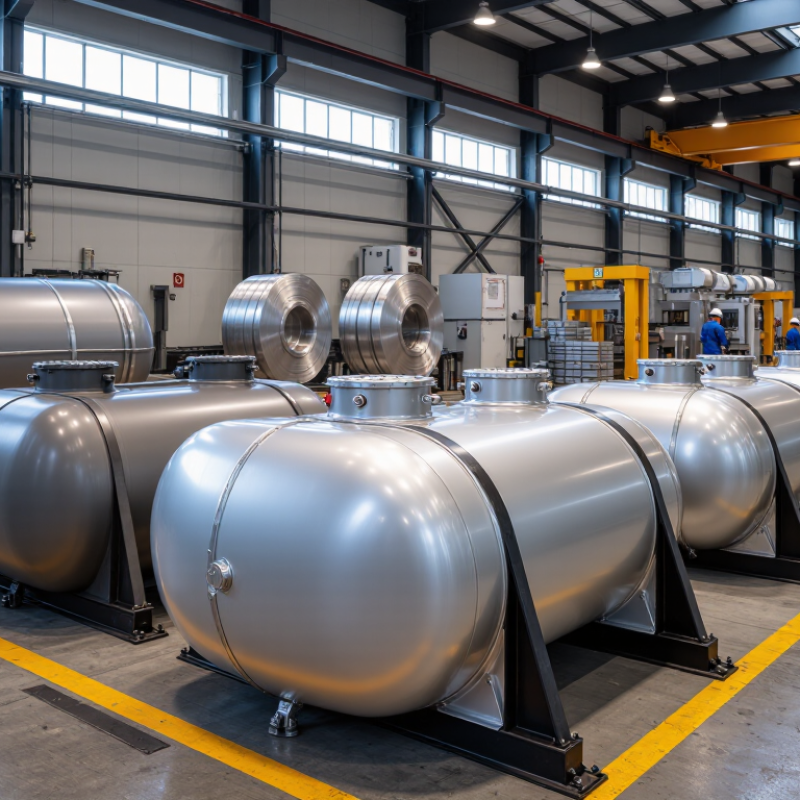
A reliable truck fuel tank manufacturer is defined by controlled evidence, not catalog capacity. In fleet inspections, look for material certificates, heat numbers, weld maps, and batch-level traceability. Aluminum tanks should show alloy and temper records. Steel tanks need coating thickness and corrosion controls. These details matter because tanks face vibration, road salt, stone impact, and thermal cycling. The U.S. Department of Transportation’s FMVSS No. 301 requires fuel-system integrity testing after frontal, lateral, and rear impacts. A serious supplier designs around this requirement and validates leakage performance beyond one laboratory sample. Small detail, big consequence.
Quality data should be visible. Ask for pressure-decay results, weld inspection rates, rejection trends, and corrective-action records. The U.S. Department of Energy’s Transportation Energy Data Book reports petroleum supplied roughly 90% of U.S. transportation energy in 2022. That dependence makes every leak, blocked vent, or loose mounting bracket expensive. Reliable manufacturers also publish dimensional tolerances, inlet geometry, mounting-load limits, and service guidance. Check whether tanks withstand salt-spray testing and vibration profiles that resemble actual routes. Certifications help, but they can become paperwork theater. A buyer should inspect samples, ask uncomfortable questions, and compare field-failure data. Perfect records are rare. Unexplained gaps are worse.
| Evaluation Dimension | Reliable Manufacturer Benchmark | What Global Buyers Should Verify | Why It Matters |
|---|---|---|---|
| Material Selection | Automotive-grade aluminum, stainless steel, or coated steel selected according to vehicle duty, fuel type, weight targets, and corrosion exposure. | Material grade, thickness, surface-treatment specification, weldability, and compatibility with diesel or gasoline applications. | The material affects tank weight, service life, corrosion resistance, and total operating cost. |
| Capacity and Dimensions | Capacity and geometry engineered to match the chassis, mounting space, ground clearance, fuel-system layout, and required driving range. | Approved drawings, dimensional tolerances, usable-volume data, filler-neck location, and vehicle-fitment records. | Correct fitment reduces installation work and helps prevent interference with suspension, exhaust, or other chassis components. |
| Structural Integrity | Reinforced construction with properly designed baffles, mounting points, brackets, seams, and impact-resistant areas. | Engineering calculations, finite-element analysis where applicable, weld inspection records, and load or vibration test results. | A rigid structure helps control fuel movement and limits fatigue damage during heavy-duty operation. |
| Leak and Pressure Testing | Every production tank should undergo a documented leak test using a controlled and repeatable procedure appropriate to its design. | Test method, acceptance criteria, calibrated equipment, inspection records, and traceability to the individual tank or batch. | Leak prevention protects fuel, cargo areas, road users, and the environment. |
| Welding Quality | Consistent weld penetration, controlled heat input, clean weld surfaces, and qualified welding procedures for the selected material. | Welder qualification records, welding procedure specifications, visual inspection standards, and non-destructive testing when required. | Weld quality is central to long-term resistance against leakage, vibration, and thermal cycling. |
| Fuel Compatibility | Tank materials, seals, hoses, fittings, and coatings must be suitable for the specified fuel and operating temperature range. | Compatibility statements for diesel, gasoline, biodiesel blends, or other approved fuels; seal and gasket material information. | Incompatible materials can swell, crack, corrode, or contaminate the fuel system. |
| Corrosion Protection | Protection strategy matched to the environment, including suitable alloy selection, coatings, drainage design, and isolation from dissimilar metals. | Salt-spray or corrosion-test data where relevant, coating specifications, surface-preparation procedures, and maintenance guidance. | Corrosion resistance is particularly important for vehicles exposed to road salt, humidity, coastal air, and off-road conditions. |
| Baffle and Fuel-Slosh Control | Internal baffles designed to reduce fuel surge while preserving effective drainage, cleaning access, and usable capacity. | Baffle layout, opening design, internal inspection method, and validation under braking, acceleration, and cornering conditions. | Effective slosh control improves vehicle stability and reduces stress on the tank and mounting system. |
| Mounting and Vibration Resistance | Mounting brackets, straps, isolators, and fasteners designed for the vehicle’s load, vibration, road conditions, and service access requirements. | Mounting instructions, torque specifications, vibration-test results, fastener details, and recommended inspection intervals. | Proper mounting reduces fatigue cracks, rubbing damage, noise, and premature loosening. |
| Fittings and Accessories | Correctly positioned filler necks, vents, drain ports, sender openings, rollover protection, caps, and fuel-line connections. | Connection dimensions, thread or flange standards, accessory material specifications, replacement-part availability, and installation drawings. | Standardized and accessible fittings simplify integration, maintenance, and future replacement. |
| Manufacturing Quality System | Documented and traceable production controls covering incoming materials, welding, inspection, testing, nonconforming products, and corrective action. | Quality certificates, inspection plans, batch records, calibration certificates, and a clear process for handling claims. | A controlled process makes product quality more consistent across large and repeat orders. |
| Regulatory and Market Compliance | The tank configuration should meet the laws, vehicle requirements, and transport rules applicable to the destination market and vehicle class. | Applicable conformity declarations, test reports, labeling details, installation limitations, and market-specific documentation. | Compliance helps reduce customs delays, installation issues, recalls, and legal exposure. |
| Customization Capability | Ability to adapt dimensions, ports, brackets, finishes, baffles, sensors, and packaging without weakening the approved design. | Engineering change process, prototype approval workflow, sample drawings, tooling policy, and minimum order requirements. | Customization is valuable when fleets use non-standard chassis layouts or operate in specialized environments. |
| Packaging and Export Readiness | Protective packaging that prevents dents, scratches, contamination, and fitting damage during inland transport, container loading, and international shipment. | Packaging drawings, moisture protection, stacking limits, loading photos, shipping marks, and export documentation capability. | Good packaging lowers the risk of transit damage and supports efficient global logistics. |
| Technical Support and After-Sales Service | Clear installation guidance, responsive engineering support, spare-part access, warranty terms, and documented claim-resolution procedures. | Warranty duration and exclusions, response targets, service contacts, spare-part lead times, and field-failure feedback process. | Reliable support reduces vehicle downtime and helps fleets manage the product throughout its service life. |
Note: Actual requirements vary by vehicle model, fuel type, operating environment, destination market, and applicable regulations. Buyers should confirm all technical and compliance details before approving production.
Aluminum reduces weight and resists corrosion. Steel offers strong impact stiffness and simpler repairs. Plastic can resist rust, but temperature behavior needs careful testing.
Consider fuel type, climate, vibration, and mounting structure. A tank suited for mild weather may perform poorly under repeated thermal cycling.
Request weld inspection records, pressure-test results, coating specifications, and batch traceability. Missing records weaken confidence.
No. FMVSS 301 and UN Regulation No. 34 address important safety risks. Certification does not prove long-term durability under vibration.
Check wall thickness after forming, baffle design, brackets, ports, straps, and protective guards. Small parts can create large field problems.
Review capacities, mounting layouts, filler positions, outlet types, and available materials. A large catalog means little without reliable engineering support.
Confirm caps, straps, valves, sending-unit openings, repair guidance, warranty terms, and material traceability. Documentation matters as much as the tank.
Compare five-year maintenance data, inspection procedures, packaging, delivery consistency, and lead times. The cheapest option may become expensive after repeated repairs.
Choosing a reliable Truck Fuel Tank manufacturer requires more than comparing prices. Global buyers should evaluate production experience, quality-control systems, engineering capabilities, delivery reliability, and after-sales support. The most important materials may include durable aluminum, steel, or other application-appropriate alloys, selected according to vehicle type, fuel compatibility, climate, and operating conditions. Buyers should also confirm that manufacturing processes follow recognized quality and safety standards, including consistent welding, accurate dimensions, leak testing, corrosion protection, and traceable inspections.
A strong manufacturer should offer a broad product range, such as tanks in different capacities, shapes, mounting configurations, and vehicle applications, while also supporting customization when required. Before placing an order, buyers should verify relevant certifications, test reports, factory audits, and documentation accepted in their target market. The final selection should balance product quality, regulatory compliance, technical communication, lead time, warranty terms, and total ownership cost. This approach helps buyers choose a dependable partner capable of delivering safe, compatible, and consistent fuel tank solutions for local and international vehicle markets.

 Hongkai Auto