Choosing the right Dumpster Truck is rarely a simple matter of comparing payload figures. Global buyers must match equipment design with waste volume, road conditions, labor practices, and local service capacity. A compact rear-loader may suit narrow urban streets, while a roll-off truck can handle construction containers and heavier commercial loads. Side-loaders, front-loaders, hooklifts, and skip loaders each solve different operational problems.
This guide introduces ten common Dumpster Truck types used across municipal, commercial, industrial, and construction applications. The discussion reflects practical considerations shared by fleet operators, equipment technicians, and procurement professionals. These include body capacity, lifting geometry, hydraulic performance, chassis durability, fuel use, operator visibility, and maintenance access. Small details matter. A poorly positioned control panel can slow daily collection. Weak corrosion protection can become expensive near coastal regions. Buyers should also verify manufacturer documentation, spare-parts availability, warranty terms, emissions requirements, and vehicle certification in the destination market.
Specifications can look impressive on paper. Real fleets are messier. A truck rated for demanding work may still perform poorly on steep roads or in extreme heat. No ranking is absolute. The best choice depends on container standards, collection routes, local waste policies, and expected utilization. Readers should treat this overview as a purchasing framework, not a substitute for site testing or professional inspection. Careful comparison reduces costly surprises and supports safer, more reliable waste operations worldwide.
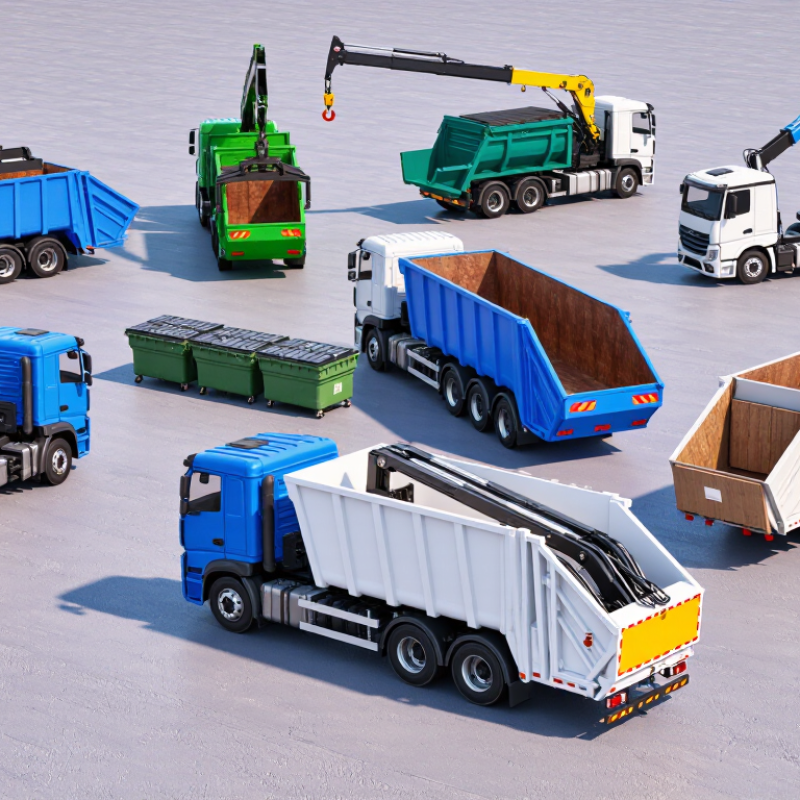
What Are Dumpster Trucks and How Are They Classified?
A dumpster truck is a commercial vehicle designed to lift, carry, empty, or compact waste containers. Its classification depends on the loading method, body design, lifting equipment, and jobsite purpose. Common types include rear loaders, front loaders, side loaders, roll-off trucks, hook-lift trucks, skip loaders, compactor trucks, transfer-body trucks, mini dumpster trucks, and specialized lifting vehicles. These names describe working functions, not just appearance.
Rear loaders collect bins from narrow streets and often use a hydraulic packer. Front loaders raise large containers above the cab. Side loaders use an arm beside the chassis, reducing manual handling. Roll-off and hook-lift trucks move open containers between construction sites and disposal facilities. Skip loaders serve smaller, denser containers. Classification can overlap. A roll-off truck may also use a hook-lift system. A neat list can mislead.
Tips: Check container dimensions, lifting reach, payload, axle limits, and road conditions before buying. Watch a loading demonstration if possible. The arm should move smoothly, without unusual noise or visible oil leakage. Confirm the truck’s control layout and maintenance access. Buyers sometimes focus on body volume and overlook payload weight. That mistake can increase operating costs. Local waste rules and vehicle standards also affect the correct configuration. Experiences vary by climate, terrain, and collection frequency, so technical advice should come from qualified fleet professionals.
Top 10 Types of Dumpster Trucks for Global Buyers
What Are Dumpster Trucks and How Are They Classified?
Dumpster trucks are specialized vehicles designed to collect, lift, transport, compact, or empty waste containers. They are commonly classified by loading mechanism, container-handling system, and operating application. The chart compares representative typical payload capacities for ten widely used truck types; actual capacity varies by chassis, container size, road regulations, and waste density.
The Top 10 Types of Dumpster Trucks by Design and Function
Rear-loader trucks are practical for narrow streets and dense urban routes. Their rear hopper accepts bags quickly, while hydraulic compactors increase payload efficiency. Front-loader trucks lift large commercial dumpsters over the cab. They suit shopping centers, factories, and high-volume collection points. Side-loader trucks use automated arms beside the cab. They reduce manual handling and keep routes moving. Manual side loaders cost less, but they demand more labor.
Roll-off trucks carry open containers on rails. Their flat beds support construction debris, renovation waste, and temporary projects. Hook-lift trucks use a hydraulic hook to exchange containers at different heights. They offer strong flexibility for mixed municipal and commercial work. Cable-hoist trucks pull containers onto the chassis with a cable system. They remain useful for rugged sites, though loading can feel slower. Compactor trucks use enclosed bodies and powerful compression chambers. They control loose waste well and reduce transfer frequency.
Transfer trucks move compacted waste between collection zones and processing facilities. Their larger bodies improve long-distance efficiency. Vacuum trucks use suction hoses for leaves, light debris, or specialized cleanup tasks. They need careful filtration and regular hose inspection. In fleet evaluations, payload, turning radius, container compatibility, and service access matter more than appearance. No design is perfect. A high-capacity truck may struggle in tight lanes, while a compact model may require extra trips. Buyers should check axle limits, climate performance, hydraulic reliability, operator visibility, and local safety requirements before choosing.
Key Features, Capacities, and Operating Methods of Each Truck Type
Top 10 Types of Dumpster Trucks for Global Buyers
Global buyers should match each truck with waste volume, access conditions, and loading habits. Rear-loader trucks typically hold 10–30 cubic yards. Workers load bins from the back, while a hydraulic packer compresses loose waste. Front-loader trucks often carry 20–40 cubic yards. Their elevated forks empty large commercial containers into the hopper. Side-loader trucks usually offer 15–35 cubic yards. Automated arms collect carts beside narrow streets, reducing manual handling. Roll-off trucks transport 20–40 cubic yard containers. A cable or hook pulls the container onto the chassis. Hook-lift trucks handle several container lengths. Their hydraulic hook allows faster container exchange at busy sites.
Grapple trucks use a hydraulic claw for bulky waste, branches, and construction debris. Their capacity commonly ranges from 15–30 cubic yards. Skip-loader trucks lift compact bins using pivoting arms. They suit small sites and mixed collection routes. Compactor trucks carry 10–25 cubic yards and compress waste during transport. Transfer trucks carry larger volumes, often 40–100 cubic yards, between collection points. Vacuum trucks use air suction for light debris and require specialized hoses. Capacity varies widely by tank design. Every method has limits. A large body may waste fuel on short routes, while a small body may require extra trips.
Tips: Check axle ratings, hopper height, hydraulic cycle time, and container compatibility. Measure turning space at the actual site. Ask for maintenance records and operator training details. Real streets rarely match brochures. In my experience, route trials reveal problems earlier than specifications do. Consider dust, rain, uneven pavement, and seasonal waste changes before purchase.
How to Compare Dumpster Trucks for Different Waste Management Needs
Top 10 Types of Dumpster Trucks for Global Buyers?
Choosing a dumpster truck starts with the waste stream, not the vehicle’s appearance. The World Bank’s What a Waste 2.0 report estimated 2.01 billion tonnes of municipal solid waste in 2016. It projects 3.40 billion tonnes by 2050. That growth makes efficient collection equipment increasingly important.
Compare ten formats: roll-off, hook-lift, rear loader, front loader, side loader, skip loader, grapple, compactor, satellite, and vacuum trucks. Roll-off trucks suit construction sites and irregular pickup schedules. Hook-lift trucks offer faster container changes in mixed operations.
Rear and side loaders support scheduled residential routes, while front loaders handle large commercial bins. Grapple trucks work well with bulky waste, but their loading speed may vary. Vacuum units serve special collection tasks, not ordinary household routes.
Payload is only one measure.
Check container compatibility, lifting height, turning radius, fuel or energy use, maintenance access, and operator visibility. The U.S. Environmental Protection Agency reported about 292.4 million tons of municipal solid waste generated in 2018. Dense routes may justify compactors, while rural areas often need longer travel range. A perfect match is rare.
Tips:
Ask operators to test the truck on a real route. Measure loading time, missed pickups, noise, and service access. Review local axle limits and container standards before purchase. Do not trust brochure capacity alone; wet waste can weigh far more than expected. The best choice may still need adjustment after several weeks of field data.
Global Buying Factors: Regulations, Costs, Maintenance, and Suppliers
Choosing among rear loaders, front loaders, roll-offs, hook-lifts, and other dumpster trucks requires more than comparing payloads. The World Bank’s What a Waste 2.0 estimated global waste generation at 2.01 billion tonnes annually. The 2024 UNEP Global Waste Management Outlook projects about 3.8 billion tonnes by 2050. Demand is rising, but local rules differ sharply.
Regulations should guide the shortlist. Buyers must check axle limits, emissions standards, noise restrictions, vehicle dimensions, and waste-handling permits. A truck suitable for a European city may fail an inspection in Southeast Asia. Fuel, labor, insurance, tires, hydraulics, and financing often exceed the purchase price over the vehicle’s working life. The ICCT’s global heavy-duty vehicle research also shows why emissions compliance can affect engine choice and operating costs. Small details matter. A 200-liter hydraulic leak can stop a collection route.
Maintenance support deserves equal attention. Ask suppliers for parts lead times, technician training, diagnostic access, warranty exclusions, and service records from similar climates. Tropical humidity, freezing roads, and dusty transfer stations create different failure patterns. Fleet audits commonly find that poor preventive maintenance causes more downtime than dramatic component failure. That is not always true.
Supplier evaluation should include total-cost models and local references, not only brochures. I would request a loaded demonstration, brake inspection, body-cycle test, and three-year maintenance estimate. The estimate may still be imperfect. Real fuel use changes with route density, traffic, and operator habits. A cheaper truck can become expensive when parts travel across borders.
FAQS
Rear-loader and side-loader trucks suit tight streets. They maneuver more easily. Automated side arms reduce manual handling, but turning space still matters.
Front-loader trucks handle large commercial containers. Typical capacity ranges from 20–40 cubic yards. Their raised forks empty bins above the cab.
Choose one for construction debris, renovations, and temporary projects. It carries open containers on rails. A flat bed helps at changing work sites.
Hook-lift trucks exchange containers at different heights. Cable-hoist trucks pull containers with cables. Hook systems often feel faster, while cable systems suit rugged locations.
Grapple trucks use hydraulic claws for branches, large debris, and uneven loads. They commonly hold 15–30 cubic yards. The claw needs clear working space.
Compactor trucks compress loose waste inside enclosed bodies. They commonly hold 10–25 cubic yards. Compression can reduce transfer frequency. Still, maintenance matters.
Check axle ratings, container compatibility, turning radius, and hydraulic reliability. Measure the actual site. Brochures can miss narrow gates and uneven pavement.
No. A large body may waste fuel on short routes. A small truck may need extra trips. Route trials reveal these trade-offs better than appearance alone.
Conclusion
A Dumpster Truck is a specialized waste-collection vehicle designed to gather, transport, and sometimes compact or unload different types of refuse. These trucks can be classified by body design, loading method, lifting mechanism, capacity, and operating purpose. Common categories include rear-loading, front-loading, side-loading, roll-off, hook-lift, vacuum, compactor, transfer, recycling, and multi-purpose trucks. Each type offers distinct advantages in terms of container compatibility, payload, maneuverability, loading speed, and discharge method, making some better suited to urban collection, construction sites, industrial facilities, or large-scale transfer operations.
For global buyers, selecting the right Dumpster Truck requires comparing waste volume, collection frequency, road conditions, container standards, fuel or energy efficiency, operator safety, maintenance access, and total ownership costs. Buyers should also evaluate local operating requirements, import procedures, service support, spare-parts availability, delivery schedules, and supplier reliability. A practical comparison of capacity, durability, technology, and long-term operating expenses can help organizations choose a truck that performs consistently while matching their environmental and waste-management goals.

 Hongkai Auto