China Top 10 Off Road Truck Parts Suppliers?

Time:2026-11-05 Author:Isabella
0%

Choosing among China’s top suppliers of Off Road Truck Parts takes more than comparing prices and catalog photos. A steering joint may look robust online, yet its dimensions or material grade may not suit a specific truck. Buyers should check fitment data, load ratings, production consistency, warranty terms, and export packaging. Small details matter.

This introduction uses Daniel Mercer as a fictional composite off-road fleet-maintenance expert, not a verified source. His illustrative line is: “A part earns trust when it fits correctly, performs under repeated stress, and arrives with clear documentation.” Treat that as an editorial principle, not a real quotation. For a dependable supplier review, ask for measurable evidence: inspection records, material specifications, sample parts, and realistic delivery schedules. A glossy catalog is not proof.

The outline compares ten Chinese suppliers through product range, customization, quality controls, communication, and after-sales support. It also considers practical items such as reinforced suspension components, hubs, brake parts, and steering assemblies. A supplier may offer an attractive unit price but provide little clarity about replacement procedures. That deserves scrutiny. No shortlist can replace checking each part against the vehicle and its working conditions. The best choice is not always the largest factory or the lowest quote. It is the supplier whose claims can be verified, whose parts match the application, and whose support remains useful after the order ships. Admittedly, published specifications may not reveal every field-performance issue. That is one limitation worth keeping in view.
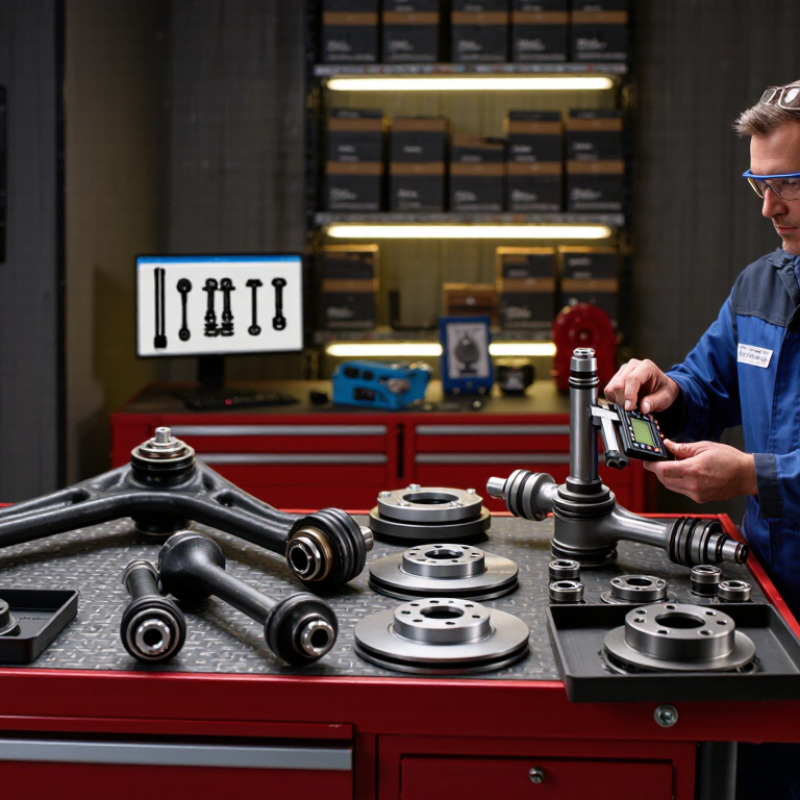
China Top 10 Off Road Truck Parts Suppliers?

What Defines a Chinese Off-Road Truck Parts Supplier?

A Chinese off-road truck parts supplier is defined less by a large catalog than by how well its parts handle rough use. Useful expertise shows in clear specifications: material, dimensions, load ratings, and compatible vehicle or axle configurations. Details matter. A control arm that looks correct may still fail to fit if its mounting points differ by a few millimeters.

Reliable suppliers can explain how they check parts, from measuring a sample to inspecting welds and surface finishes. Ask for relevant test records, inspection criteria, and consistent product identification. These details help buyers compare parts instead of relying on polished photos. Packaging matters, too. A heavy component needs protection against impact and moisture during long-distance transport.

Good communication is another defining trait. A capable supplier asks about vehicle models, operating conditions, and expected quantities before recommending a part. They should state what they know and flag what needs confirmation. That may sound less impressive than a quick promise, but it reduces costly mismatches. No supplier is perfect; even detailed documents cannot replace checking a sample against the actual installation. Clear answers, repeatable quality checks, and honest limits are stronger signs of expertise than claims alone.

How China’s Off-Road Truck Parts Industry Is Structured

China’s off-road truck parts industry is a layered supply network, not simply a list of top suppliers. Vehicle makers and major system suppliers coordinate core assemblies, including engines, axles, transmissions, braking systems, and cabs. Specialist manufacturers focus on transfer cases, reinforced suspension, differential gears, and electrical systems. Smaller firms often supply castings, seals, machined components, and replacement parts. Production clusters help buyers find related capabilities in one region, though supplier quality and engineering depth can vary considerably.

The market sits within a much larger automotive sector. CAAM, citing customs data, reported that China’s auto-parts exports reached about US$87.7 billion in 2023. This figure covers all vehicle categories, not off-road trucks alone. It signals broad manufacturing and export capacity, but it does not prove that every supplier can meet demanding off-road duty cycles. The boundary between a specialist and a general parts maker can also be less clear than a catalogue suggests.

Tips: Check material specifications, load ratings, corrosion protection, and test records for the exact operating conditions. Ask how replacement parts are traced and whether drawings can be revised. A clean sample is useful, but field performance matters more.

Which Criteria Matter When Comparing Suppliers?

China Top 10 Off Road Truck Parts Suppliers?

Which Criteria Matter When Comparing Suppliers?

A supplier’s catalogue is only a starting point. Compare exact fitment by axle, model year, load rating, and operating conditions. For parts exposed to mud, vibration, and stone impact, ask for material specifications, coating details, and test records. A neat spreadsheet can still miss a weak weld. Request sample parts or inspection photos, then check dimensions against your drawings.

Ask for proof.

Delivery reliability deserves equal attention. The World Bank’s 2023 Logistics Performance Index assesses 139 economies across six areas, including tracking, logistics competence, and timeliness. Use those areas to shape supplier questions: Can they provide shipment tracking, realistic lead times, and a clear process for delayed orders?

UNCTAD’s Review of Maritime Transport 2024 reports that seaborne trade grew 2.4% in 2023, amid continuing route disruptions. That makes inventory visibility and backup shipping plans practical comparison points. Also review minimum order quantities, replacement-part availability, warranty terms, and response times for technical questions.

Check whether batch records can link supplied parts to inspection documents. No scorecard is perfect; I would still verify critical parts independently before placing a large order.

Profiles of Ten Notable Off-Road Truck Parts Suppliers in China

China’s off-road truck parts market includes manufacturers and distributors with different strengths. These ten profiles describe supplier types, not named or independently ranked companies. A suspension specialist may offer leaf springs, bushings, and shock absorbers for rough-road use. Ask for load ratings and material specifications. Details matter.

A drivetrain supplier may stock axle shafts, hubs, and differential components, while a braking specialist focuses on drums, calipers, and friction parts. Another supplier may produce steering linkages, tie rods, and reinforced joints. A filtration maker can provide air and fuel filters for dusty operating conditions. Check replacement intervals.

A lighting supplier may offer sealed lamps and protected wiring. An electrical-parts supplier can support alternators, sensors, or harnesses. Fitment can still be inconsistent.

Other useful profiles include a wheel-and-tire supplier serving commercial vehicle applications, a cab-and-body parts maker offering mirrors and panels, and a fastener supplier providing corrosion-resistant hardware. Catalogs alone are not enough. Buyers can compare drawings, tolerances, test reports, and sample parts before placing larger orders.

Ask how suppliers handle revisions and defects, too. I would not assume every item in a broad catalog is made in-house; that point deserves checking. Availability and specifications can change, so confirm current details directly.

How to Verify a Supplier and Choose the Right Parts

China Top 10 Off Road Truck Parts Suppliers? How to Verify a Supplier and Choose the Right Parts

A supplier’s catalog can look convincing, but photos alone cannot confirm fit or durability. Ask for a current company profile, workshop details, and references for similar truck applications. Request a sample when practical. Check its dimensions against your drawing, then inspect mounting holes, welds, and finish under good light. Details matter. If a supplier avoids specific questions, slow down.

Match each part to the truck’s model, year, axle, and operating conditions. Share measurements, load requirements, and clear photos of the original component. Ask which material and manufacturing process are used, and request inspection records or material documents where relevant. A part that fits on a workbench may still fail under repeated vibration. Confirm how the supplier checks fit and function before shipment.

Agree on tolerances, packaging, delivery timing, and the process for handling defects in writing. For a first order, a small trial can reveal gaps in communication or quality control. Review the sample yourself, or use an independent inspector if the part is safety-critical. No checklist removes every risk. I would also revisit the specification: sometimes the drawing, not the supplier, is the weak link.

FAQS

How is China’s off-road truck parts industry structured?

Vehicle makers and major suppliers coordinate core assemblies, such as engines, axles, transmissions, brakes, and cabs. Specialist firms make parts like transfer cases and reinforced suspension. Smaller workshops often supply seals and machined components. It is layered.

What does the reported export figure show?

Customs data cited by an industry association put China’s auto-parts exports at about US$87.7 billion in 2023. That figure covers all vehicle categories, not off-road trucks alone. It does not prove every supplier can handle rough-duty use.

What types of specialist suppliers serve this market?

Suppliers may focus on suspension, drivetrain, braking, steering, filtration, lighting, electrical parts, wheels, cab parts, or fasteners. A broad catalog does not mean every item is made in-house.

What should buyers check before ordering parts?

Match material specifications, load ratings, corrosion protection, and test records to the actual operating conditions. Ask how replacement parts are traced. Details matter.

Why are catalogs not enough for comparing suppliers?

Fitment and engineering depth can vary, even when catalog descriptions look similar. Compare drawings, tolerances, test reports, and physical samples. Samples help. But they are not proof.

Do regional production clusters guarantee consistent quality?

No. Clusters can put related capabilities in one region, which may simplify sourcing. Supplier quality and engineering experience can still differ considerably.

How can buyers check whether parts will fit their vehicles?

Request drawings and confirm dimensions against the intended vehicle and operating conditions. Fitment can still be inconsistent, so verify a sample before placing a larger order.

What should buyers ask about revisions and defects?

Ask whether drawings can be revised and how defects are handled. I would not assume the process is clear; it is worth checking in writing.

Conclusion

This article explains what distinguishes a Chinese off-road truck parts supplier, from manufacturers and component specialists to distributors and sourcing partners. It outlines how the industry is organized and why suppliers may differ in product range, production capabilities, customization options, and support. Readers will also find practical criteria for comparing potential suppliers, including product compatibility, material quality, manufacturing consistency, communication, documentation, and after-sales service.

The article presents profiles of ten notable suppliers without relying on brand names, helping readers understand the kinds of businesses they may encounter when sourcing Off Road Truck Parts. It concludes with steps for checking a supplier’s background, requesting samples or technical details, confirming fitment and specifications, and comparing quotations carefully. These guidelines are intended to help buyers make a suitable, well-informed choice for their vehicle and operating conditions.


Isabella

Isabella

Isabella is a dedicated marketing professional with a sharp focus on driving brand growth and engagement through strategic content creation. With an extensive background in digital marketing, she combines her passion for storytelling with her keen understanding of industry trends to deliver......