 Hongkai Auto
1. Spain’s Commercial Infrastructure & Concrete Logistics Macro-Trends
Spain's construction sector has undergone a profound structural shift over the past decade. Driven by the European Union's NextGenerationEU recovery funds and Spain's ambitious Plan de Recuperación, Transformación y Resiliencia, national investment has pivoted heavily toward high-speed rail expansions (AVE network), port upgrades in Valencia and Barcelona, and clean-energy infrastructure developments. These complex structural concrete projects demand transit solutions that do not merely haul concrete but ensure its physical integrity over varied elevations, microclimates, and traffic patterns.
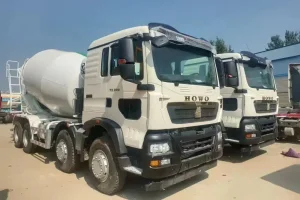
Under Spanish standards (Instrucción de Hormigón Estructural - EHE-08/Código Técnico de la Edificación), concrete batches must maintain strictly specified hydration parameters from the batching plant to the pouring point. For major cities like Madrid, Barcelona, Seville, and Bilbao, heavy traffic conditions paired with scorching summer temperatures represent a major challenge. Ready-mix operators require mixer drums designed with optimized thermal properties, variable discharge rates, and rapid transit mechanisms that minimize heat generation during drum rotation. In response, global vehicle manufacturers are redesigning transit mixer dynamics specifically for the Spanish micro-market, prioritizing thermal isolation, hydraulic system reliability, and advanced chassis stability.